Extreme heat can lead to serious health issues. Heat-related illness can affect anyone, but high-risk groups include people younger than age 5 and older than age 65; people with chronic illnesses; people taking certain medications; and those who are exercising or working outdoors.
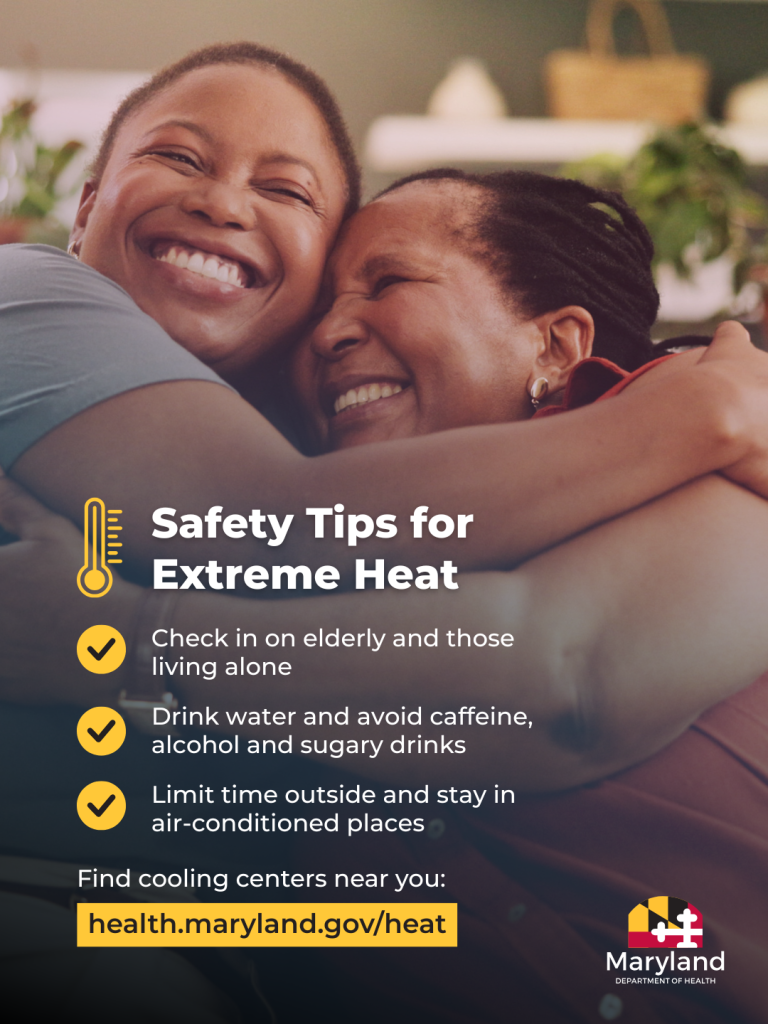
If you do not have a cool place to go or water available, please visit one of the following local cooling/refreshing stations during extremely hot and humid times:
Water Stations (*Accessible After Hours)
- The Hope Center, 125 N. Prospect St., Hagerstown*
- Horizon Goodwill Industries, 200 N. Prospect St., Hagerstown*
- Potomac Community Services Homeless Outreach, 29 E. Washington St., Hagerstown
Cooling/Refreshing Stations (For anyone who needs to cool down, use the restroom, get a drink of water/fill up a water bottle)
- REACH’s Day Resource Center, Monday-Thursday, 9 a.m.-1 p.m.
- PCS Homeless Outreach @ 29 E. Washington St., Hagerstown, Monday-Friday, 8 a.m.-Noon & 1-4 p.m.
- Soul Haven/OCA @ 119 E. Antietam St., Hagerstown, Monday-Friday, 10 a.m.-4 p.m.
- Horizon Goodwill YASC, Monday-Friday, 10 a.m.-3 p.m.
- The Hope Center/Rescue Mission, Daily
- Robinwood Professional Center’s Atrium has tables and chairs, water, restrooms and Wi-Fi
- Valley Mall
- John Wesley UMC (Courtyard entrance), Saturdays, 1-3 p.m.
- SPECIAL NOTE – ALL WASHINGTON COUNTY PUBLIC LIBRARIES ARE CLOSED FRIDAY AND SATURDAY, JULY 3-4, 2026.
Heat Illness
Heat Cramps – Signs include muscle pain/spasms, caused by loss of water and salt from heavy sweating. TREATMENT:
- Stop all activity and sit quietly in a cool place
- Drink water, a sports drink, or other drinks with no caffeine or alcohol
- Do not resume activity for a few hours after the cramps go away, as heat cramps can lead to heat exhaustion or heat stroke
- Get medical help if the cramps do not go away in one hour
Heat Exhaustion – Signs include dehydration; cool, moist, pale or flushed skin; extreme weakness; muscle cramps; nausea; headache; and possibly vomiting or fainting. TREATMENT:
- Rest in a cool, shaded area
- Drink fluids
- Seek medical attention if symptoms worsen or do not improve in an hour
Heat Stroke – Signs include body temperature more than 105 degrees F; dry, red skin; rapid, weak pulse; rapid, shallow breathing; convulsions; disorientation; delirium; and coma. TREATMENT:
- Call 911
- Cool bath or wet towels
- Do not give fluids if the victim refuses water, is vomiting or has fainted
Source: health.maryland.gov
Tips to Keep Pets Safe When Temperatures Rise
Source: American Red Cross
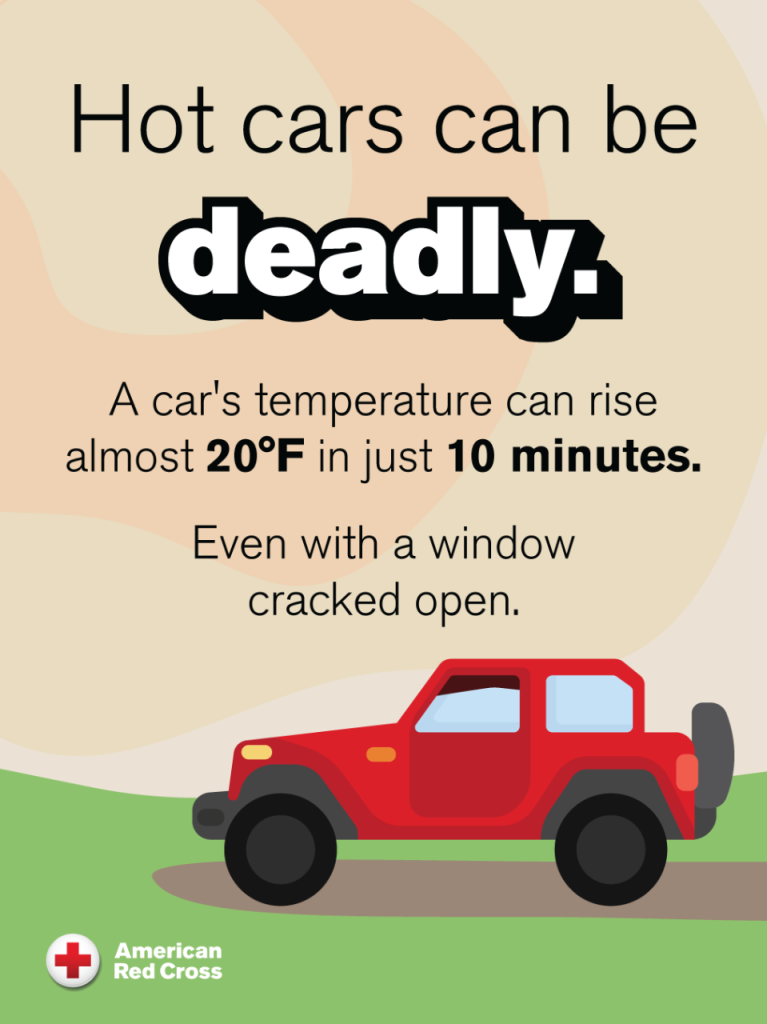
- Never leave your pet in a hot vehicle, even for a few minutes.
- Give pets plenty of fresh, clean water when it’s hot or humid outdoors. Make sure they have a shady place to get out of the sun, be careful not to over-exercise them and keep them indoors when it’s extremely hot.
- Don’t let dogs linger on hot pavements when the temperatures rise. Their body can heat up quickly, and sensitive paw pads can burn.
- Pets can fall out of an open window. Keep all unscreened windows or doors in your home closed and make sure adjustable screens are secured.
- Do not leave pets unsupervised around a pool, lake or beach. Have water available and don’t let them drink from the pool, etc.
- Be careful what you plant. Some plants in your garden can be hazardous to animals.
- Never use fireworks around pets, keep pets indoors. Exposure to lit fireworks can potentially result in severe burns or trauma, and many pets are also fearful of loud noises and can become lost, scared or disoriented.
- Animals can suffer heat stroke. Some of the signs of heat stroke in your pet are: collapse; body temperature of 104 degrees or higher; bloody diarrhea or vomiting; excessive panting or difficulty breathing; increased heart rate; very red gums increased salivation. If you suspect your pet has heat stroke, take their temperature rectally. If the temperature is above 104 degrees, cool the animal down. The easiest way to do this is by using the water hose and placing cool, water-soaked towels on the dog’s head, neck, feet, chest and abdomen. Stop cooling the animal when its temperature reaches 103 degrees. Bring your pet to the veterinarian as soon as possible as heat stroke can lead to severe organ dysfunction and damage.