-
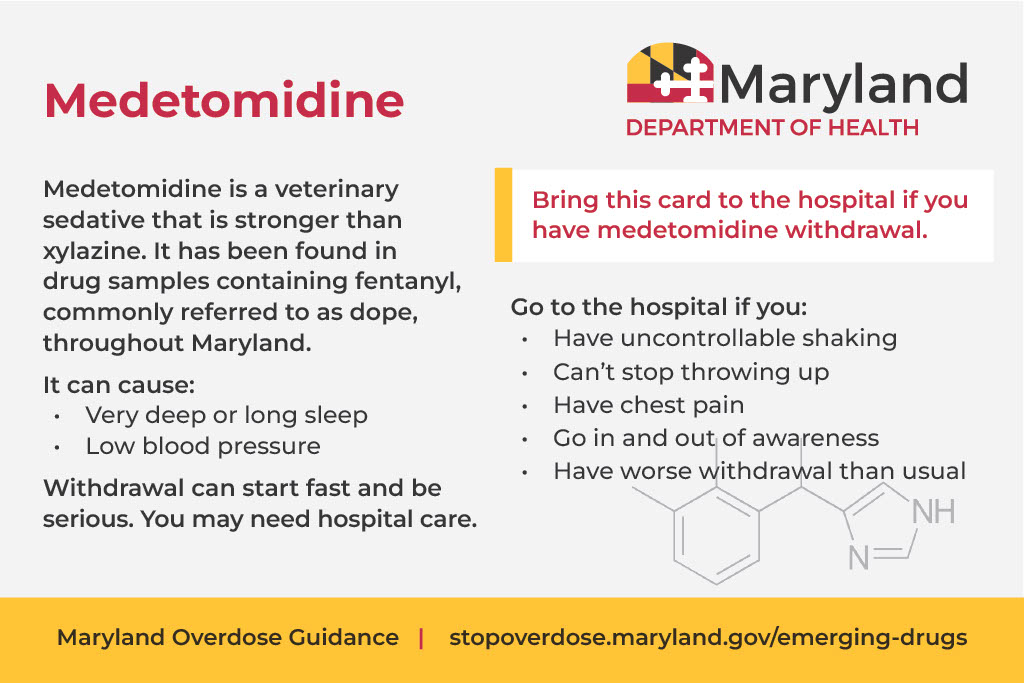
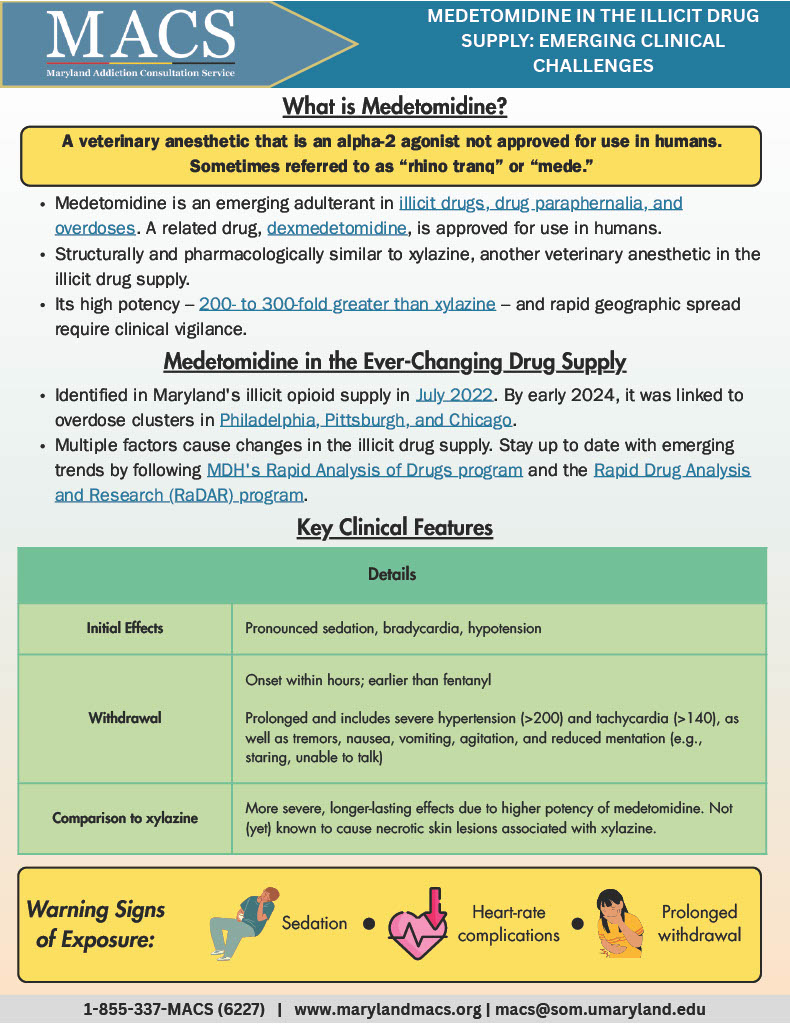
Medetomidine is a veterinary sedative that is stronger than xylazine. In Maryland, medetomidine is most often found in combination with fentanyl, fentanyl analogs and anesthetics.
-
Between June 2024 and October 2025, medetomidine was primarily seen in Cecil County. Medetomidine prevalence is increasing statewide in 2025, including notable increases in Baltimore City and Harford, St. Mary’s and Wicomico Counties.
-
Medetomidine use has been associated with severe withdrawal, often requiring hospitalization.
-
The risk of overdose death can be reduced by always carrying naloxone, giving rescue breaths and using the recovery position for all overdoses, using test strips prior to use, having substances tested at a local Opioid Associated Disease Prevention and Outreach Program (OADPOP), and avoiding using illicit substances alone.
-
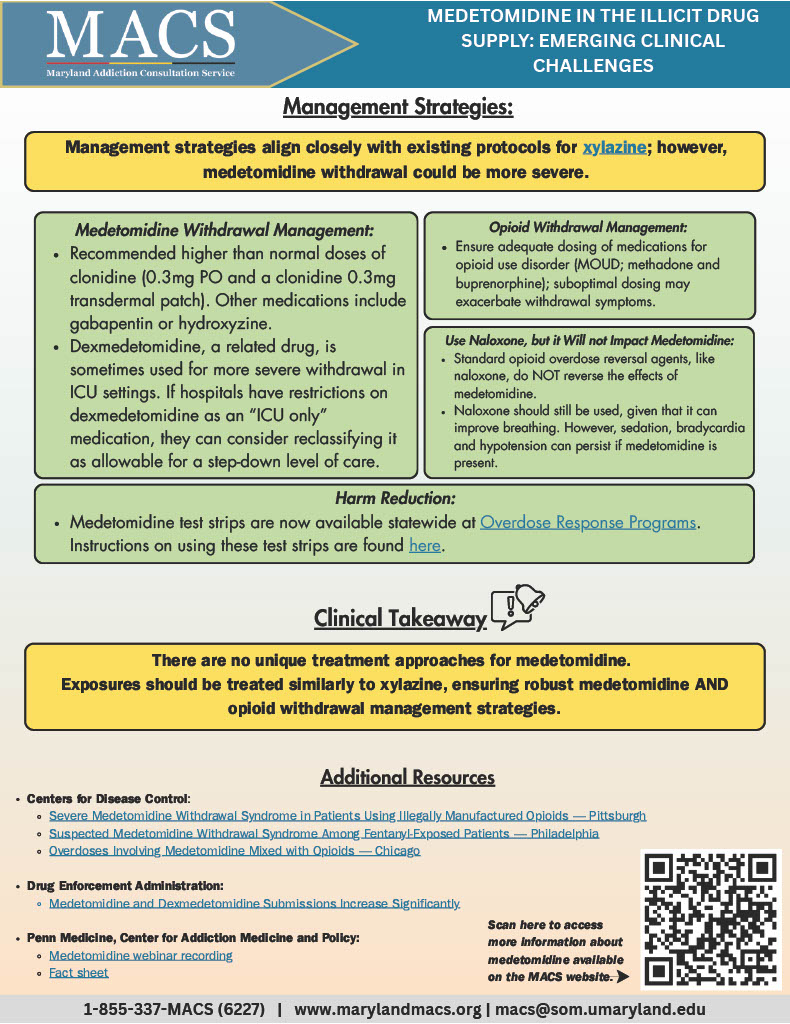
Resources for clinicians can be found here, including withdrawal protocols from Philadelphia Department of Health and a webinar hosted by CDC on clinical implications of medetomidine mixed with opioids. Treating medetomidine withdrawal requires treating fentanyl withdrawal with long-acting opioid agonists like methadone and using adjunctive medications such as: Clonidine, Guanfacine, Tizanidine, Dexmedetomidine, Ketamine, Olanzapine, Hydroxyzine, Benzodiazepines, Prochlorperazine or Chlorpromazine.